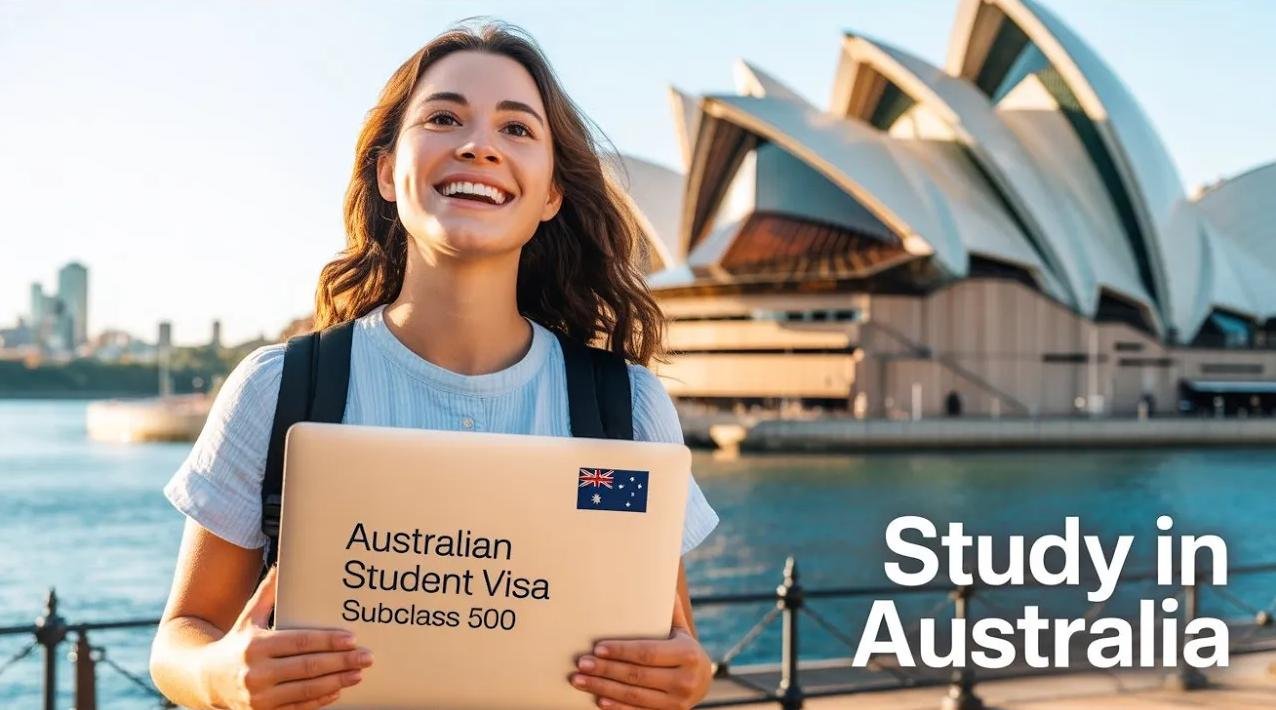
Studying in Australia is an attractive option for international students seeking internationally recognized qualifications, practical learning opportunities, and exposure to a multicultural environment. Australian universities, colleges, and vocational institutions offer programs in business, information technology, engineering, healthcare, hospitality, education, and many other fields.
If you are planning to study in Australia in 2027, understanding the Australia Student Visa Subclass 500 is an essential first step. This visa allows eligible international students to live in Australia temporarily while completing an approved course of study.
However, receiving admission from an Australian institution does not automatically guarantee a student visa. Applicants must satisfy immigration requirements, demonstrate sufficient financial capacity, obtain appropriate health insurance, and provide evidence that studying is their genuine purpose.
This guide explains the Australia Student Visa 2027 requirements, application fees, financial evidence, required documents, processing times, work rights, and the application process.
1. What Is the Australia Student Visa Subclass 500?
The Australian Student Visa Subclass 500 is a temporary visa designed for international students who want to study an eligible course at an approved Australian education provider.
Depending on the course and enrolment period, the visa may allow students to stay in Australia for up to six years.
With a Subclass 500 visa, eligible students can:
- Study an approved course at an Australian education institution.
- Live in Australia for the period permitted by their visa.
- Travel to and from Australia while the visa remains valid.
- Work up to 48 hours per fortnight while their course is in session, subject to visa conditions.
- Access certain post-study opportunities if they later qualify for another visa.
Students enrolled in a master’s degree by research or a doctoral degree may have different work rights. Their family members may also have different work conditions.
The visa is suitable for several study categories, including higher education, vocational education and training (VET), English language courses, school programs, postgraduate research, and eligible exchange programs.
2. Australia Student Visa Requirements 2027
To qualify for an Australian Student Visa in 2027, applicants must meet the requirements established by the Department of Home Affairs.
The exact documents and eligibility criteria can vary depending on the applicant’s nationality, education provider, course, and personal circumstances.
Confirmation of Enrolment (CoE)
One of the most important requirements is a valid Confirmation of Enrolment (CoE).
Before applying for a student visa, you generally need to:
- Choose an eligible Australian education provider.
- Apply for your preferred course.
- Receive an offer of admission.
- Accept the offer and complete the provider’s enrolment requirements.
- Pay the required initial tuition deposit.
- Receive your Confirmation of Enrolment.
Your CoE confirms that you have enrolled in an approved course. It must remain valid when the Department of Home Affairs makes its decision.
Genuine Student (GS) Requirement
Australia uses the Genuine Student requirement to assess whether an applicant genuinely intends to study in Australia.
This requirement replaced the previous Genuine Temporary Entrant (GTE) requirement for student visa applications lodged from 23 March 2024.
Applicants may need to explain:
- Their current personal and financial circumstances.
- Their previous education and employment history.
- Why they selected Australia for further education.
- Why they chose a particular course and institution.
- How the course will benefit their future career.
- Any other relevant information about their circumstances.
The online application includes questions designed to assess the Genuine Student requirement. Responses must be in English, and each response has a word limit.
Applicants should provide honest, clear answers supported by relevant documents. Generic statements copied from the internet may not adequately explain an individual’s circumstances.
English Language Requirements
Many Australian education providers require international students to demonstrate English language proficiency.
Depending on your course and circumstances, you may need an approved English language test, such as:
- IELTS Academic or IELTS General Training.
- PTE Academic.
- TOEFL iBT.
- Cambridge C1 Advanced.
- Other tests accepted under the applicable Australian immigration rules.
The required score depends on the visa rules, course type, education provider, and any applicable exemptions.
Do not assume that one IELTS or PTE score applies to every applicant. Check the current Department of Home Affairs requirements and your institution’s admission criteria before booking an English test.
Financial Capacity
Applicants must demonstrate that they have enough money to support themselves during their studies in Australia.
The financial requirement generally includes:
- Tuition fees for the relevant period.
- Living expenses.
- Travel costs.
- Additional expenses for accompanying family members.
- School costs for school-aged dependants, where applicable.
Financial evidence may include eligible bank deposits, approved loans, scholarships, or other accepted financial support.
Health and Character Requirements
Applicants must meet Australia’s health and character requirements.
Depending on your circumstances, you may need to provide:
- Medical examination results.
- Police clearance certificates.
- Information about previous visa refusals or cancellations.
- Additional documents requested by immigration authorities.
Applicants should answer all character-related questions truthfully.
3. Australia Student Visa Fees 2027
The visa application charge is an important part of the overall cost of studying in Australia.
From 1 July 2026, the standard Student Visa Subclass 500 application charge increased to AUD 2,500 for the main applicant.
This is the published standard charge as of the date of this guide. The actual fee payable in 2027 may change, so applicants should confirm the amount through the official Australian Visa Pricing Estimator before submitting their application.
Additional charges may apply for family members included in an eligible application.
Other Costs to Consider
The visa application fee is not the only expense involved in studying in Australia.
| Expense | What to consider |
|---|---|
| Visa application | Standard main applicant charge starts at AUD 2,500 under the July 2026 fee schedule |
| Tuition fees | Depends on the university, course, and study level |
| OSHC | Overseas Student Health Cover for the required period |
| Medical examination | Required where applicable |
| English test | IELTS, PTE, or another accepted test |
| Travel expenses | Flights and other transportation |
| Accommodation | Rent, utilities, and initial setup costs |
| Living expenses | Food, transport, and personal costs |
Students should prepare a realistic budget before accepting an offer from an Australian institution.
4. Australia Student Visa Financial Requirements 2027
Financial capacity is one of the most important parts of the Australian student visa application.
Applicants must show that they can afford their education and living expenses without depending entirely on employment in Australia.
Under the published financial requirements, the minimum annual living-cost amounts include:
| Applicant | Annual living-cost amount |
|---|---|
| Main student applicant | AUD 29,710 |
| Spouse or partner | AUD 10,394 |
| Dependent child | AUD 4,449 |
| Annual school costs for a school-aged dependent | AUD 13,502 |
These figures are financial-capacity amounts, not a guarantee that the same amount will cover every student’s actual expenses.
In addition to living costs, applicants must account for the relevant tuition fees and travel expenses.
Example of Financial Planning
Suppose an international student has the following estimated first-year expenses:
- Annual tuition fees: AUD 20,000
- Required annual living costs: AUD 29,710
- Estimated travel expenses: AUD 2,000
The illustrative total would be AUD 51,710.
This example is for budgeting purposes only. Your actual financial evidence requirement depends on your course fees, payments already made, travel costs, family circumstances, and the rules applicable when you apply.
Can Parents Sponsor an Australian Student Visa?
In some circumstances, applicants may use evidence of their parents’ or partner’s personal annual income instead of providing the standard funds evidence.
The published income thresholds are:
- AUD 87,856 for an applicant without accompanying family members.
- AUD 102,500 where accompanying family members are included.
The Department specifies the type of official income evidence it accepts. For example, relevant government tax documents may be required. A bank statement or an employer letter alone may not satisfy this alternative.
Always check the current financial-capacity rules before preparing your application.
5. Required Documents for Australia Student Visa Subclass 500
Preparing accurate documents can help reduce avoidable delays and requests for additional information.
The exact document checklist is different for each applicant. Common documents include:
- Valid passport.
- Confirmation of Enrolment (CoE).
- Academic transcripts and educational certificates.
- English language test results, if required.
- Financial capacity evidence.
- Overseas Student Health Cover (OSHC) details.
- Genuine Student responses and supporting evidence.
- Employment documents, where relevant.
- Medical examination information, if required.
- Police certificates, if requested.
- Documents for eligible family members, where applicable.
- Approved welfare arrangements for applicants under 18.
All documents should be genuine, accurate, and consistent with the information entered in the online application.
If your documents are not in English, you may need to provide suitable English translations.
6. How to Apply for Australia Student Visa 2027
Most student visa applications are submitted online through the Australian Government’s ImmiAccount system.
The following steps explain the general process.
Step 1: Choose an Australian Education Provider
Start by researching Australian universities, colleges, and registered education providers.
Compare:
- Course availability.
- Tuition fees.
- Entry requirements.
- Campus location.
- Course duration.
- Career opportunities.
- Scholarships and financial support.
Choose a course that matches your previous education and future career plans.
Step 2: Apply for Admission
Submit your application to the selected institution.
You may need to provide academic records, English language results, identification documents, and other admission materials.
If the institution accepts your application, it may issue an offer letter explaining the course details and payment requirements.
Step 3: Receive Your CoE
Accept the offer and complete the required enrolment process.
After meeting the institution’s conditions, you should receive your Confirmation of Enrolment.
Keep a copy of your CoE because you will generally need it for your student visa application.
Step 4: Arrange Overseas Student Health Cover
Most international students must maintain Overseas Student Health Cover (OSHC) for the required period of their stay.
OSHC helps cover eligible medical and hospital expenses while you are in Australia.
Compare approved insurance providers and make sure your policy covers the relevant dates.
Step 5: Prepare Your Documents
Use the official Department of Home Affairs Document Checklist Tool to identify which documents apply to your circumstances.
Prepare your passport, academic records, financial evidence, English test results, and other required supporting documents.
Step 6: Complete the Online Application
Create or access your ImmiAccount and select the Student Visa Subclass 500 application.
Enter your personal information, education history, course details, and financial information carefully.
Answer the Genuine Student questions honestly and provide supporting evidence.
Step 7: Pay the Visa Application Charge
Pay the applicable visa application fee through the available payment method.
Remember that the standard main applicant fee was AUD 2,500 from 1 July 2026. Check the official pricing estimator for the amount applicable on your submission date.
Step 8: Complete Biometrics or Health Checks if Requested
Depending on your application and nationality, you may be asked to provide biometrics or complete medical examinations.
Follow the instructions in your immigration correspondence and attend any required appointments.
Step 9: Track Your Application
Use ImmiAccount to check application updates and respond promptly if the Department requests further information.
Avoid booking non-refundable travel before receiving your visa decision.
Step 10: Receive Your Visa Decision
If your application is approved, you will receive a visa grant notification.
Check your visa conditions, permitted stay period, work limitations, and course details before travelling to Australia.
7. Australia Student Visa Processing Time 2027
Processing time is an important consideration for students planning to begin their studies in 2027.
There is no single guaranteed processing time for every Subclass 500 application.
The time required can depend on:
- The education sector and course.
- The application processing priority.
- The volume of applications.
- Whether the application is complete.
- Financial and document verification.
- Health and character checks.
- Requests for additional information.
The Department of Home Affairs provides an online Visa Processing Times Guide based on recently decided applications.
Offshore student visa applications are also subject to government processing priorities. The Department has published indicative commencement targets for different priority levels, but these are not guarantees of a final decision.
Students should apply well before their course commencement date and regularly check the official processing-time guide.
8. Can International Students Work in Australia?
One advantage of the Australian Student Visa is that eligible international students can work while studying.
For most students, the general work limit is:
48 hours per fortnight while their course is in session.
Students may generally work unlimited hours during official course breaks, subject to their visa conditions.
There are special rules for students studying a master’s degree by research or a doctoral degree. Eligible students in these categories may not be subject to the standard work-hour limit after their course has commenced.
Students should understand that employment is not a substitute for meeting the visa financial-capacity requirements.
It is important to follow all work conditions and check the visa conditions attached to your individual grant.
9. Can You Bring Your Family to Australia on a Student Visa?
Family arrangements are an important consideration for international students.
Australian student visa rules concerning family members changed from 2 October 2026.
Under the updated rules, students generally cannot include partners or children in a Student Visa application unless an applicable exemption applies. The changes also affect whether family members can join a student later.
Because these rules are relatively recent, applicants planning to bring a spouse or children should carefully review the official Department of Home Affairs guidance before making financial or travel arrangements.
Do not assume that the family-member rules that applied in previous years will automatically apply to a 2027 application.
10. Common Reasons for Australian Student Visa Refusal
A student visa application may be refused if the applicant does not meet the relevant legal requirements.
Common risk factors include:
- Insufficient or unreliable financial evidence.
- Incomplete or inconsistent application information.
- Weak explanation of the chosen course.
- Concerns about whether the applicant genuinely intends to study.
- Invalid or cancelled Confirmation of Enrolment.
- Failure to meet health or character requirements.
- Incorrect or misleading documents.
- Failure to respond to immigration requests.
Applicants should carefully review their documents before submission and provide truthful information throughout the process.
No education agent or migration consultant can guarantee a student visa approval.
11. Tips to Improve Your Australia Student Visa Application
A well-prepared application can help avoid unnecessary delays and reduce the risk of missing important information.
Consider these practical tips:
Choose a relevant course: Your selected program should make sense in relation to your previous education, experience, or career plans.
Prepare genuine financial evidence: Make sure your financial documents are clear, verifiable, and sufficient for the applicable requirements.
Write meaningful Genuine Student responses: Explain your actual reasons for selecting the course and institution rather than relying on generic statements.
Check your English requirements: Confirm the accepted tests, minimum scores, and exemptions before applying.
Maintain accurate documents: Ensure your name, dates, qualifications, and other details are consistent across your records.
Apply early: Give yourself enough time to obtain admission, prepare documents, and receive a visa decision.
Use official information: Immigration requirements and fees can change, so always check the latest government guidance.
12. Frequently Asked Questions (FAQs)
How much does an Australia Student Visa cost in 2027?
The standard Student Visa Subclass 500 application charge for the main applicant increased to AUD 2,500 from 1 July 2026. The amount payable in 2027 should be checked through the official Visa Pricing Estimator before applying.
How much bank balance is required for an Australian student visa?
The published annual living-cost requirement for a single student is AUD 29,710. Applicants must also account for applicable tuition fees and travel expenses. Additional amounts may apply for accompanying family members.
Can I work while studying in Australia?
Yes. Most eligible international students can work up to 48 hours per fortnight while their course is in session. Different rules apply to eligible master’s by research and doctoral students.
Is IELTS compulsory for an Australian student visa?
Not necessarily for every applicant. English language evidence depends on the applicable visa rules, accepted exemptions, and the requirements of the education provider. IELTS is one of several accepted tests.
How long can I stay in Australia on a Subclass 500 visa?
The visa may allow eligible students to stay for up to six years, depending on the course and enrolment period.
Can I apply for an Australian student visa without a CoE?
A valid Confirmation of Enrolment is generally required for a Student Visa Subclass 500 application. Check the official rules for any applicable exceptions.
Can my spouse accompany me to Australia?
Family-member rules changed on 2 October 2026. Students generally cannot include partners or children unless an exemption applies. Review the latest official guidance before applying.
Does an Australian student visa guarantee permanent residency?
No. A Student Visa is a temporary visa for study. Permanent residency requires a separate visa application and eligibility under the relevant migration program.
Conclusion
The Australia Student Visa Subclass 500 provides international students with an opportunity to pursue education at Australian institutions while gaining valuable international experience.
However, applicants planning to study in 2027 should understand the latest visa requirements, application fees, financial-capacity rules, English language criteria, Genuine Student requirement, and work conditions.
The standard main applicant visa charge increased to AUD 2,500 in July 2026, and important application and family-member rules changed in October 2026. These changes make it especially important to check official information before submitting an application.
Start by selecting an eligible course, obtaining your Confirmation of Enrolment, arranging Overseas Student Health Cover, and preparing accurate financial and academic documents.
A carefully prepared application can help you avoid common mistakes and move forward with greater confidence.